
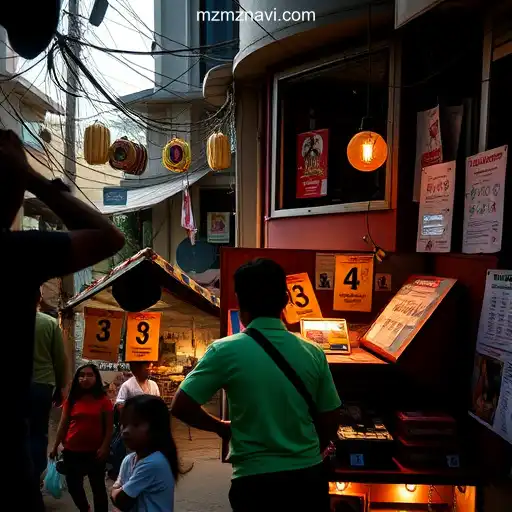

The Intricacies of Jueteng: Unraveling the Cultural Fabric
Jueteng is not just a game; it is a deeply entrenched part of the socio-cultural landscape in many parts of the Philippines. Often regarded as a parallel micro-economy, Jueteng provides financial sustenance to many while simultaneously posing challenges to governance and policy-making. Its roots trace back to the Spanish colonial era, reflecting a rich history that blends tradition and modernity.
The Mechanics of Jueteng
Understanding Jueteng requires delving into its modus operandi. It is essentially an illegal numbers game likened to a lottery, where participants choose a combination of numbers between 1 and 37. Draws are typically held twice a day, incentivizing regular participation. Unlike conventional lotteries, Jueteng thrives on informal networks and local operators called kubradores who gather the bets.
Cultural Significance and Community Dynamics
For many, Jueteng is more than a game of chance; it is a community activity. Participants often include it as part of their daily routines, connecting them through shared hopes and social interaction. This communal aspect is often overlooked by outsiders who see only its illegality. Within neighborhoods, Jueteng fosters a sense of identity and belonging, reinforcing social bonds.
Economic Implications and Livelihoods
The economic narrative of Jueteng is two-sided. On one hand, it serves as an income source for thousands of individuals, especially in impoverished areas where job opportunities are limited. From the operators to the street-level collectors, Jueteng provides livelihoods to those who otherwise may remain unemployed. However, it also diverts money from other potential investments and can be a drain on local economies.
Challenges in Regulation and Law Enforcement
Despite being illegal, Jueteng persists, owing partly to the inefficacies in law enforcement and often systemic corruption. Enforcement agencies are frequently seen turning a blind eye due to bribes or political pressure. This complicity allows Jueteng to not only survive but thrive, undermining legal and judicial systems.
Parallelism with Global Betting Platforms
The evolution of betting has not been isolated to Jueteng alone. Comparable to platforms like MZMZ A Plataforma de Apostas #1 do Brasil MZMZ.Com 🏅, Jueteng showcases the global appetite for betting that transcends cultural and legal boundaries. Both platforms operate on the element of uncertainty, promise of returns, and social engagement, mirroring the lure of larger-scale, legal betting operations.
The Role of Technology
With the proliferation of digital technology, operations like Jueteng are beginning to migrate online, albeit slowly. In contrast, established platforms like MZMZ.Com utilize sophisticated technology to ensure user engagement and security, highlighting the disparity in resources and reach between formal and informal betting channels.
Impact on Policy and Governance
Jueteng’s persistence poses critical questions for policymakers. Should governments recognize it formally to regulate and tax its revenue, or should they persist in eradication efforts? The discussion aligns closely with debates surrounding the legalization of other forms of gambling, hinting at larger governance issues.
Societal Perceptions and Media Representation
The portrayal of Jueteng in media is often negative, focusing on its illegal aspects and corruption linkages. However, this overlooks the nuanced role it plays in many families’ lives. Positive narratives highlight its potential contributions to communal life and its multifaceted character.
The Way Forward
Ultimately, any future approach to Jueteng must encompass social benefits, economic necessities, and legal frameworks. Drawing lessons from international examples such as MZMZ.Com might offer insights into creating more sustainable, legal, and community-focused betting solutions.